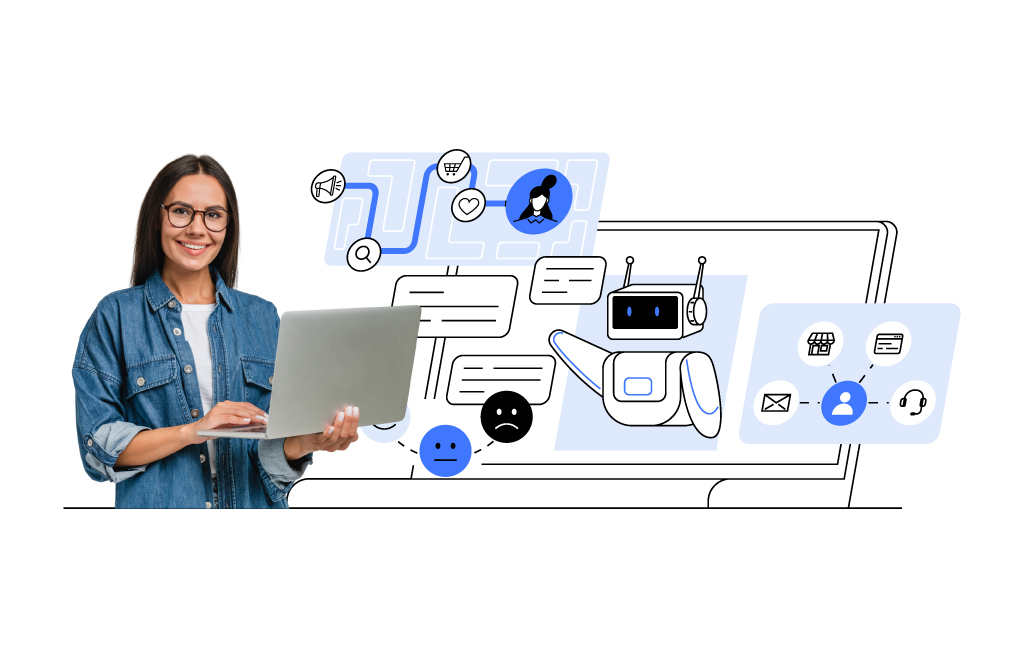
Recently, the way businesses teach their employees has undergone a significant transformation. Previously, employers primarily offered employees classes, PowerPoint presentations, printed guides, and plentiful paper files for their employee training needs. Though some companies still use these traditional types of training, they are no longer suitable for our fast-paced business climate.
Now more than ever, employees expect to be able to learn quickly on an need-to-know basis and find more relevant information to aid them throughout their daily duties as opposed to simply being educated in an organization on an unrelated topic without regard to how they would apply what they learned in their jobs.
Conversely, many organizations desire for their training systems to save their employees time and allow their employees to focus less manually on completing tasks associated with their training while also providing their employees ongoing development opportunities.
Therefore, companies are now utilizing AI chatbots to develop and enhance the likelihood of employee participation within the educational process.
Not only are AI chatbots enhancing employee participation in the educational process, but they also provide organizations with more efficient and timely ways to provide employees with the answers they seek while also assisting employees in learning at their own pace.
Let’s take some time and look at the many ways that AI chatbots can be implemented in corporate education and explain why so many businesses are incorporating chatbots into their training programs.
Additional Read:
Best LMS with AI Chatbot for Employee Training in 2026
10 Ways AI Chatbots Are Transforming Corporate Learning in 2026
1. Employees Get Instant Answers Without Waiting
During training, recurrently, employees encounter delayed support as one of the most common issues. Employees need simple answers to questions such as:
- Where is the training module located?
- What is the process for submitting an assignment?
- How should I interpret a company policy?
- Which course should I take next?
Typically, a HR team, manager, or trainer would respond to these requests over time; however, this slows down the learning process and creates frustration.
AI Chatbots will address these delays by providing employees with instant support at any time and in all locations so that an employee can quickly receive an answer to their simple questions. As a result, learning continues in a timely manner without interruption.
For example, for employees who work remotely and/or use a hybrid model will find this to be particularly beneficial since support can be received at any time, regardless of the time zone in which they work or the location from which they work.
2. Learning Becomes More Personalized
Each employee will require their own unique training to be successful.
For example, a sales executive, a developer and a team leader will each need to develop different skill sets and experience levels to achieve their own objectives as well as support overall organization’s goals. However, traditional training systems often do not have the ability to provide such tailored learning paths to employees.
Using chatbots with AI allows for a more personalized experience by taking into account the following criteria to direct learners towards content that is tailored for them:
- Position
- Level of experience/ability
- Department
- Progress
- Previous training received
By creating more tailored training for employees to see how they relate back to the employee during the course of their learning, they will become more engaged in their training as well.
3. Employee Onboarding Becomes Simpler
The process of onboarding new employees is a labor-intensive process for human resources.
Typically, new hires will be given a lot of information in a very short amount of time and this includes information about the company (policies), the tools used by the company, the different processes that need to be established at the company, and the training documents.
This often creates a lot of confusion and new hire will have an overload of information.
Using AI chat-bots, the onboarding process can be much more organized by having the AI chat-bot serve as a digital guide throughout the onboarding.
With AI chat-bots, new employees can:
- Ask questions about the onboarding process
- Access training materials immediately
- Receive reminders when a task is due
- Learn to complete different processes in sequential order
Using AI chat-bots creates a more seamless onboarding experience and reduces redundant work for HR.
4. Training Feels More Interactive
Employees become less interested in training from businesses that have repetitive/boring programs. Presenting long presentations and print media does not usually keep workers’ attention for very long.
AI chatbots are providing a way to make learning less tedious by delivering a more conversational experience through the use of natural language in asking and responding to questions.
Learning is experienced in a more active and engaging way as a result of this type of interaction.
Additionally, organizations can incorporate:
- quizzes,
- short assessments,
- interactive learning paths, or
- quick knowledge checks
with their chatbots, which provide small elements of engagement for employees, keeping them connected to the training process.
5. Microlearning Becomes Easier to Deliver
Contemporary employees like to learn in small-time segments instead of having to sit for hours watching lengthy videos or attending large seminars.
AI-based chatbots are an excellent companion for micro-learning offering:
- Short courses
- Fast summarization
- Bite-sized training
- Daily Tips
- Short video recommendations
The micro-learning approach naturally fits into busy work schedules and increased retention.
Employees have access to a form of continual learning while being able to complete their regular day-to-day tasks as normal.
6. Managers Get Better Visibility Into Training Progress
Most companies are having a problem measuring if there is actually learning occurring during the training of their employees.
The tracking ability of AI based learning systems allows managers to measure:
- Course completion
- Employee participation
- Engagement with learning
- Performance on assessments
- Common barriers to learning
With this information it helps organizations to understand what works and where employees will need support,
So rather than guessing, businesses have an actual basis for making their training decisions.
7. Companies Can Reduce Training Costs
Common elements of conventional training systems include;
- Outside Trainers
- Physical Workshops
- Travel Costs
- Printed Material
- Multiple onboarding sessions
Because of this, growing companies can incur a tremendous amount of expense.
AI chatbots automate many of the repetitive tasks associated with training tasks reducing the amount of Manual Labour required by Employees. Instead of having to constantly refer to Instructors, Employees can independently obtain information they need to complete their tasks.
Because of this, Businesses will be able to increase their training capacity more efficiently while controlling the cost associated with providing each Employee with Training.
8. Learning Continues Beyond Initial Training
Numerous businesses continue to regard learning merely as an initial process to be conducted at the time of hiring.
However, in reality, staff need to participate in continuous learning to maintain pace with changes to technology, procedures and business expectations.
AI chatbot technology provides ongoing support for continued learning by:
- Making recommendations for additional classes
- Providing reminders
- Recommending skill acquisition paths
- Helping to encourage improved performance through continued education
As a result, businesses create a much more advanced education culture by providing ongoing opportunities for employees to upgrade their skill set.
9. Compliance Training Becomes Easier to Manage
It is often required for many industries to complete their compliance training. Tracking this training manually can pose many challenges.
Due to an employee’s inability to meet timelines, employee’s inability to update their compliance training records, employee’s inability to comprehend policies being changed.
AI Chatbots can help automate the completion process of compliance training by:
- Sending training reminders.
- Answering any questions asked by an employee relating to the policies.
- Assisting/Coaching an employee in taking their mandatory training courses.
- Tracking an employee’s completion of training.
The above is helpful in lowering compliance risks and making it easier for employees to complete the training required by the company.
10. AI Chatbots Are Shaping the Future of Corporate Learning
The way we learn in companies is changing, with flexibility, data and employees, at the centre of the experience.
Traditional training methods are being replaced by an AI chat bot based approach to create better learning experiences that are:
- Quicker
- Customised
- Greater scale
- Have less management overhead.
As technology continues to develop, AI driven learning platforms will play an even greater role in developing skills for tomorrow’s workforce.
Companies that adopt these technologies early will have a greater ability to create and provide a skilled, flexible workforce.
Conclusion:
Training for businesses is no longer about only giving an employee basic training. Employees want to have an experience that is easy to access, fun and related to the job they are being trained to do.
AI Chatbots are being leveraged by Corporations to help employees access training materials, create engagement in the learning process, provide a unique and personalized training approach based on individual need and preference, and improve the overall effectiveness of training programs.
These chatbots can be found in organizations of all sizes and can be used to train/support employees during the on-boarding/compliance process, but also to continue developing their skills.
Utilizing these contemporary education methods will help an organization have greater employee growth, develop a more flexible organization, and compete more effectively in the global marketplace.
