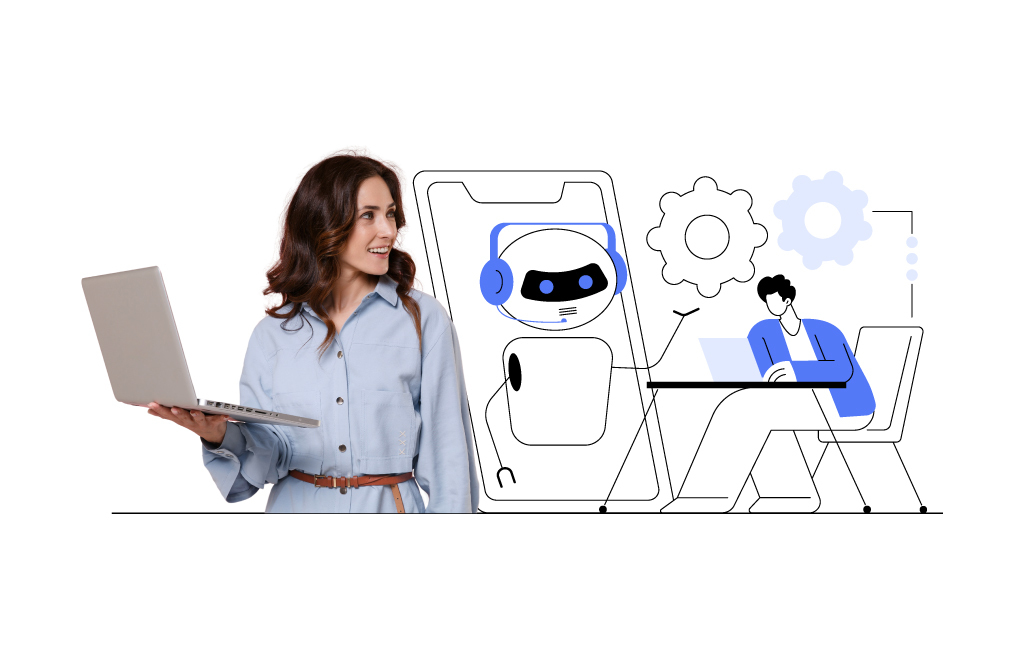
HR departments pay $1,300 per employee every year for training. Unfortunately, 70-80% of learners will drop out of courses before they complete them, resulting in wasted budgets and skill gaps for companies that equate to 24% of lost productivity.
To provide immediate, customized assistance to employees, AI chatbots inside the LMS can help increase course completion rates by 30%-40% and reduce the number of redundant support tickets by 45%.
This detailed 1000-word guide provides HR and/or L&D leaders at the consideration stage of decision-making with all necessary pain points, evidence of proven benefit, an implementation roadmap, and examples of ROI, all of which are based on enterprise benchmarks from 2025 that will assist users in assessing which modern LMS solution(s) might meet their respective needs.
The Hidden Training Crisis HR Teams Face
HR professionals are often faced with the challenge of finding solutions that meet their needs. For example, when employees sign up for training programs and don’t complete them, HR has no way of knowing what happened after they signed up. The problem is compounded by the fact that most employees drop off the training course after they encounter the first roadblock.
A recent study revealed that completion rates for traditional eLearning courses are only 20-30%. Common barriers to successfully completing training include:
- Late responses to questions about how to complete the training (e.g., “I’m stuck at Module 3,” etc.); and
- Multiple repetitive administrative requests (e.g., “Where do I access my certificate?” and “How do I reset my progress?”).
- Support teams are overwhelmed with 70% of routine tickets being related to issues that could easily be automated.
- The growing size of the organizations (50-500 employees) also results in an inability to properly scale the number of support staff in proportion to the number of employees.
Because of these compounding issues, low completion rates present L&D departments with increased compliance risk, skills left unutilized, and executives questioning the return on investment in L&D. One way to solve these common issues is by embedding AI-based chatbots directly into your Learning Management System.
Additional Read:
Conversational Learning: How AI Chatbots Increase Learner Confidence & Reduce Drop-offs
How AI Chatbots Solve HR’s Core Training Problems
AI chatbots have moved away from being considered a fad for the future—it’s clear they’re changing the traditional LMS from basic functionality into “smart” learning assistants. Here are a few examples of how they do that:
- Quick, 24/7 Access to Answers (Avg. < 42 Sec)
Unlike typical email support (24-48 hr avg), AI Chatbots provide immediate response, so when a learner wants to know “How do I complete the compliance quiz?” or “Can you explain section 4 in simple language?” the Learner receives an immediate response containing context-relevant assistance. This eliminates the number one reason learners experience drop-offs from courses—frustration due to feeling stuck.
Dropout rates reduced by 50% across courses; common inquiry first contact resolution of 90% on the first contact.
- Personalized Learning Paths that Adapt to Learners’ Needs in Real-Time
AI is used to evaluate learner progress, emotional response toward learning, and gaps in learner knowledge, then customize the experience accordingly. If a learner has trouble with a concept, the chatbot will deliver micro-explanations, practice questions or video summaries to help support the learner. If a learner has demonstrated the ability to complete tasks quickly, advanced challenges will be presented.
Completion rates increase by 30-40% because learners receive exactly the support they need to maintain forward progress without feeling overwhelmed.
- Automation of Administrative Tasks for HR Teams
70% of support tickets submitted by learners relate to status checks, enrollment issues, requests for certificates, or reminders for deadlines. This frees the HR Team from performing these repetitive and mundane administrative functions so their focus can be directed toward the design of strategic initiatives rather than out-of-control task fires.
45% reduction in support team workload; 2-3x increase in content creation and analytics.
Proven ROI: Numbers Don’t Lie
Enterprise deployments consistently demonstrate massive returns:
| Metric | Traditional LMS | AI Chatbot LMS | Improvement |
|---|---|---|---|
| Course Completion | 20-30% | 50-70% | +30-40% |
| Support Ticket Volume | Baseline | -45-70% | 2-3x efficiency |
| Response Time | 24-48 hours | <42 seconds | 3,500x faster |
| Annual Cost Savings | – | $500K+ (500 users) | 340% ROI Year 1 |
| Employee Satisfaction | 60-70% | 90-95% | +30% |
5 Key Use Cases Where AI Chatbots Excel
1. Compliance Training
Bots will assist you in navigating through the various regulatory modules as well as answering any jurisdictional-specific questions and verifying your understanding of the material through interactive Q&A’s. The result of this assistance is a 95% pass rate on the first attempt.
2. Onboarding New Hires
Bots can also provide a personalized welcome for new hires by answering questions regarding paperwork, orienting new hires to the company culture, and providing role-specific training. As a result, they have been able to cut new hire ramp-up time by 40% while improving retention.
3. Sales & Customer Service Upskilling
Bots provide real-time scenario practice (“Handle this objection”) and immediate feedback to help employees achieve mastery of their skill set 25% faster than traditional training methods.
4. Leadership Development
Executive-level bots provide 1:1 coaching simulations, 360-degree feedback analysis and personalized development plans for employees to follow.
5. Global Teams
There is language support in over 100 different languages for all employees globally, so no matter where they are located, they will receive consistent training that would not require translation costs.
Step-by-Step Implementation Roadmap
Ready to deploy? Follow this proven 4-week rollout:
1st week: create a list of the top 20 queries submitted for support and create an audit trail for each. Determine 20% of all repairs that make up 80% of the total number of requests.
Establish knowledge management processes and create libraries or repositories for each set of questions.
2nd week: implement Bots. Submit your training materials and training documents to your Bot.
Establish organization structure for escalation paths. Determine what percentage of escalated requests will require human intervention (we expect to see only 10-15% of escalated cases).
3rd week: rolling out features to a limited number of users. Monitor and evaluate whether Users are satisfied with the Bot’s functionality and whether they can successfully resolve issues without any human assistance.
4th week: full rollout of the Bot to all users. Establish automatic reminders in Bot. Establish a way to monitor the effectiveness of all User interactions. Train supervisors on how to monitor their Bot’s activities and support needs for approximately five hours total.
To deploy chatbots to five hundred users will take about forty to sixty hours of implementation time, and ongoing maintenance will require an additional two hours each week.
Here are some common objections and how they have been resolved:
- Will AI hallucinations happen? Modern LMS chatbots use guardrails and context by course, as well as human escalation (10% to 16% of all interactions are escalated) to achieve a 94% accuracy rate.
- Will employees use the chatbots? Ninety-two percent of employees were satisfied on first time use. There is a significant level of gamification (badges for completion, streaks) that helps promote continued use by 85% of users.
- Is the corporate data stored securely? The chatbots are enterprise grade and use encrypted data, comply with GDPR regulations, and utilize role-based access to provide zero chance of a data breach.
The following KPIs are tracked weekly to analyze the performance of LMS chatbot programs:
- Completion increase: +25% to +40% over baseline in completion
- Decrease in number of support tickets: -45% from baseline
- Customer satisfaction average: 90% or higher
- Decrease in average time to competency: -30% from baseline
- Decrease in cost per completion: -35% or less than baseline
- User Net Promoter Score (NPS): plus 30 points
- Return on Investment (ROI): (benefits – costs) * 100 / costs = 340% in year 1.
LMS chatbots are no longer just “nice to have”—they are required to compete for enterprise-level training dollars with other LMS providers. With training budgets under tight scrutiny in 2026, LMS providers without intelligent chatbots will have a very difficult time competing for these dollars.
Conclusion
SkillTriks provides native AI chatbots within your LMS software to help Human Resources achieve student completion increases of 30% to 40%, save 45% on support costs by providing immediate query resolution and personalize learner paths through proactive engagement, and achieve a 340% return on investment. Create value with your training programs; start your SkillTriks pilot today!
